
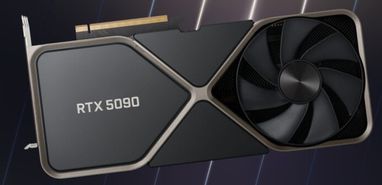
Getting a high-end graphics card at its official price shouldn’t feel like winning the lottery.
In 2026, however, that’s increasingly what the PC gaming market looks like.
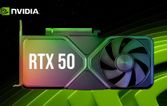
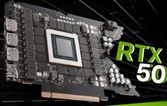
Nvidia is giving gamers attending QuakeCon a rare opportunity to purchase select GeForce RTX 50-series Founders Edition graphics cards at their original MSRP, including the flagship RTX 5090.
That’s notable because prices for some current-generation graphics cards have climbed dramatically above their launch prices.
The catch?
You’ll need to be at QuakeCon in Texas, availability is limited, and getting your hands on one is far from guaranteed.
Nvidia Is Selling RTX 5090 Cards for $1,999
Nvidia launched the GeForce RTX 5090 with an official starting price of $1,999.
At QuakeCon 2026, Nvidia is offering its Founders Edition cards through what it calls Verified Priority Access IRL, giving attendees an opportunity to buy selected GPUs at their original prices.
The cards include:
GeForce RTX 5090
GeForce RTX 5080
GeForce RTX 5070
That means a lucky QuakeCon attendee could potentially walk away with an RTX 5090 Founders Edition for its original $1,999 price.
Normally, describing a $2,000 graphics card as a bargain would sound ridiculous.
The current GPU market makes it considerably less ridiculous.
RTX 5090 Prices Have Become Extraordinary
The RTX 5090 was never designed to be affordable.
It’s Nvidia’s flagship consumer graphics card, aimed at enthusiasts who want the fastest gaming GPU available regardless of price.
But even by flagship standards, retail pricing has become extreme.
Recent market tracking has found RTX 5090 cards selling for well over $4,000 in some markets, more than twice Nvidia’s original Founders Edition MSRP.
Pricing varies significantly by country, manufacturer and retailer, so not every RTX 5090 costs that much.
Nevertheless, the gap between Nvidia’s launch price and what consumers can actually find at retail illustrates how distorted the high-end GPU market has become.
It has reached the point where PC Gamer calculated that, under certain circumstances, flying from the UK to Texas and purchasing an RTX 5090 at QuakeCon could theoretically cost less than buying one from some retailers at home.
That’s obviously not sensible buying advice.
But it demonstrates just how unusual GPU pricing has become.
Why Are Graphics Cards So Expensive Again?
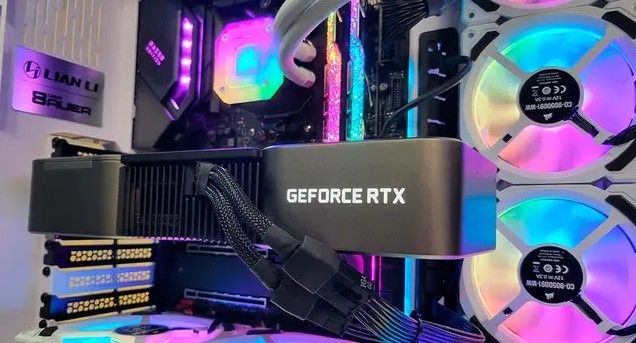
PC gamers have been here before.
The pandemic-era GPU shortage produced empty shelves, scalpers and graphics cards selling for extraordinary prices.
The situation in 2026 is different.
Current pricing pressure is being linked heavily to the rising cost of components, particularly high-performance memory.
Modern graphics cards depend on large quantities of extremely fast VRAM, and Nvidia’s RTX 50 generation uses GDDR7 memory.
As memory prices rise, graphics card manufacturers face higher production costs.
There are also reports of higher semiconductor manufacturing costs affecting the wider industry.
And then there’s AI.
AI Is Competing for the Same Industry Resources
Artificial intelligence has fundamentally changed the economics of the semiconductor business.
Nvidia’s data-centre products have become enormously important as companies race to build infrastructure capable of training and running increasingly powerful AI models.
Consumer GeForce cards and data-centre accelerators aren’t identical products, but they exist within the same broader semiconductor ecosystem.
Memory production, advanced manufacturing capacity, packaging and supply-chain investment increasingly have to account for enormous demand from AI infrastructure.
For PC gamers, that creates an uncomfortable situation.
Gaming is no longer necessarily the most financially important destination for cutting-edge GPU technology.
Nvidia still makes and sells GeForce products, of course, and PC gaming remains a major business.
But the explosive growth of AI has changed the industry’s priorities.
The RTX 5080 and RTX 5070 Matter Too
It’s easy for the RTX 5090 to dominate the discussion because its prices are so dramatic.
But the bigger issue for most gamers is what’s happening further down the product stack.
Nvidia originally launched the RTX 5080 at $999, while the RTX 5070 arrived with a $549 starting price.
Those aren’t inexpensive graphics cards either, but they’re considerably more attainable than a $2,000 flagship.
When component costs push mainstream and upper-midrange cards further above MSRP, building an entire gaming PC becomes significantly more expensive.
A graphics card that costs an additional $200 or $300 can consume money that would otherwise go toward a better CPU, more storage, additional RAM or a higher-quality monitor.
That’s why GPU pricing affects much more than GPU buyers.
It changes the economics of PC gaming as a whole.
Should You Buy a GPU at QuakeCon?
If you’re already attending QuakeCon and were planning to buy one of these graphics cards, Nvidia’s offer is certainly worth investigating.
Paying MSRP is considerably better than paying inflated third-party prices.
But travelling specifically to the event just to buy a graphics card would be a gamble.
Availability is limited, and there’s no guarantee you’ll successfully purchase the model you want.
The promotion is better viewed as a rare opportunity for people already attending rather than a practical alternative to normal retail shopping.
It also creates a slightly surreal situation.
MSRP used to be the price buyers complained about.
Now, for some high-end graphics cards, getting MSRP can feel like a special event.
Don’t Pay Any Price Just to Upgrade
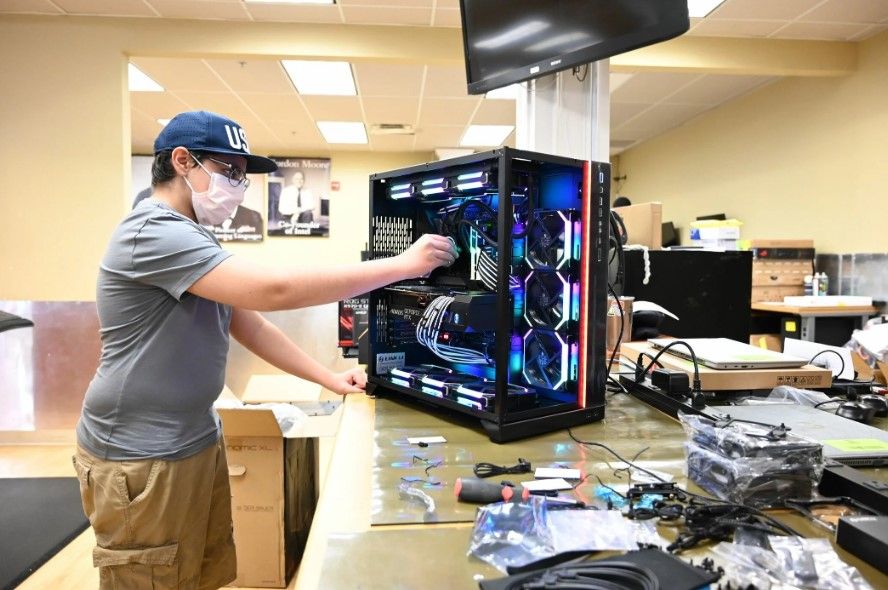
Gamers considering an upgrade should resist the temptation to treat today’s inflated prices as unavoidable.
First ask whether you actually need a new GPU.
If your existing card still delivers acceptable performance at your monitor’s resolution and refresh rate, keeping it for another year could be the smartest option.
You should also compare performance across both Nvidia and AMD rather than automatically replacing a GeForce card with another GeForce card.
Features matter too.
Ray tracing performance, upscaling, frame generation, VRAM capacity, video encoding and power consumption can all affect which GPU makes sense for a particular PC.
Most importantly, calculate the performance improvement you’re actually receiving for your money.
A faster graphics card isn’t necessarily a good upgrade if you’re paying twice what it’s realistically worth.
MSRP Shouldn’t Be a Special Feature
Nvidia selling RTX 50-series Founders Edition cards at their original prices is good news for the QuakeCon attendees who manage to get one.
But the excitement surrounding the promotion says something less positive about the state of PC hardware.
The RTX 5090 launched at $1,999—a price that already put it firmly in luxury territory.
When gamers start viewing that $1,999 price as an exceptional deal, the market has clearly moved into unusual territory.
For everyone who isn’t at QuakeCon, patience may still be the most valuable PC component you can buy.



By Radoslav Jokic
Updated on 7th August 2026